DIY vs professional driveway and concrete cleaning: what can go wrong
By Ethan Marsh · Updated 2026-06-16
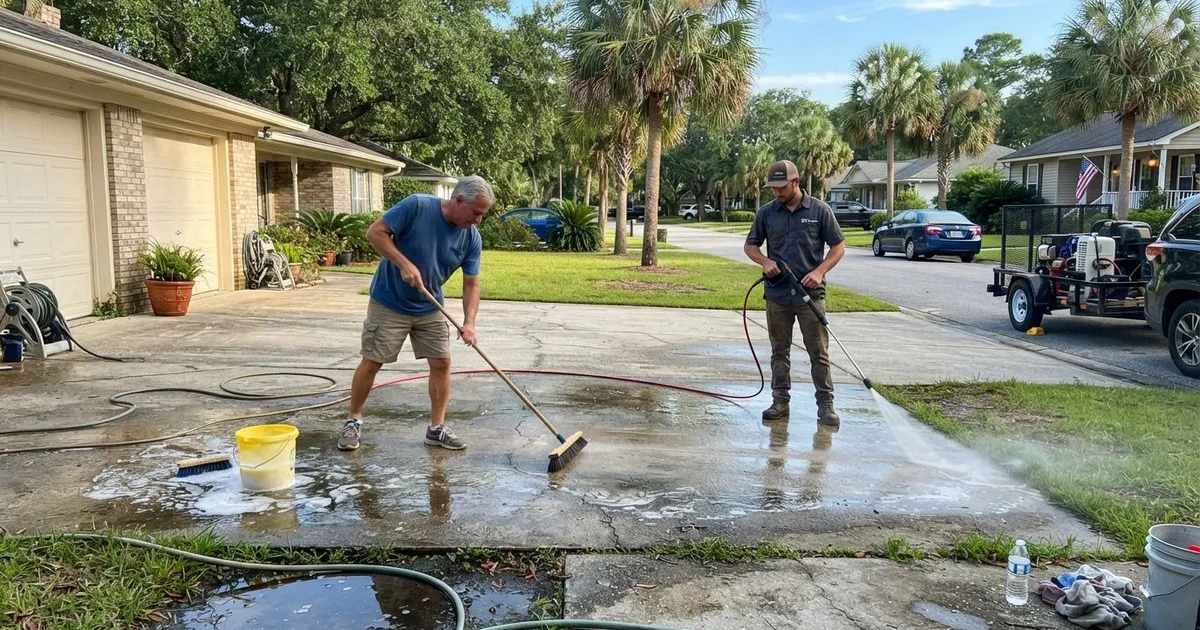
A driveway is the most common DIY pressure washing project, and it’s also where amateur mistakes show up most visibly, since concrete doesn’t hide an uneven job the way a lawn or a deck might. Before you rent equipment for driveway and concrete cleaning, it helps to know where the real risk is and where DIY genuinely makes sense.
Where DIY usually works fine
A small driveway, patio, or walkway with light dirt and no real staining is a reasonable weekend project. Rental pressure washers, typically in the 2,000 to 3,000 PSI range, handle everyday grime without much risk if you use a wide fan tip, keep the nozzle moving, and hold it a consistent distance from the surface. Sidewalks, small patios, and light seasonal dirt buildup fall into this category for most homeowners comfortable operating basic equipment.
Where DIY tends to go wrong
The mistakes that show up most often on driveways aren’t from lack of effort, they’re from technique:
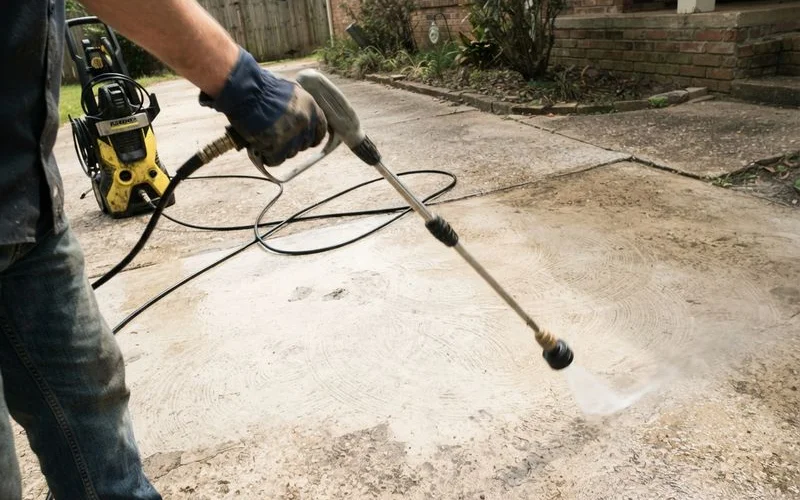
- Zebra striping. Holding a narrow, zero-degree nozzle too close or lingering in one spot cuts a visible line into the concrete surface. Once it’s etched in, it’s permanent, no amount of additional cleaning fixes it.
- Uneven cleaning. Without a surface cleaner attachment, a single jet nozzle leaves overlapping arcs that dry into a mottled, inconsistent pattern rather than one even color.
- Stripped sealant. If your driveway has an acrylic or other topcoat sealer, too much pressure or the wrong chemical can pull it off in patches, leaving a blotchy look that needs professional resealing to fix.
- Stains that don’t actually lift. Oil, rust, and grease need a dwell time with the right chemical before rinsing. Straight water pressure alone often just spreads or lightens a stain rather than removing it, which can look worse than the original spot.
- Runoff damage. Chemical runoff into grass, mulch beds, or storm drains near the driveway can kill plants or, in some HOA and municipal areas, run against local wastewater rules.
What a professional does differently
A trained crew brings a surface cleaner attachment as standard equipment, the spinning-bar tool that produces the even, streak-free finish that’s hard to replicate with a single handheld wand. They also carry the right pretreatment chemicals for oil, rust, and organic staining, dwell them properly before rinsing, and adjust pressure based on the surface, lighter for stamped or decorative concrete, more force for a plain broom-finish slab. Most importantly, they know how to contain and direct runoff so it isn’t pooling against your siding, killing your landscaping, or heading straight for a storm drain.
A rough cost comparison
| Approach | Typical cost | Risk |
|---|---|---|
| DIY, rented equipment | $40 to $100 for a weekend rental, plus chemicals | Etching, uneven results, stains that don’t lift, your own time |
| Professional service | $100 to $250 for a standard driveway | Low, backed by equipment and experience suited to the surface |
For a small, lightly dirty area, DIY often comes out ahead on cost. For a larger driveway, heavy staining, or a sealed surface, the price gap narrows and the risk of a costly mistake, redoing striped concrete or resealing a damaged coating, tips the math toward hiring a pro.
Efflorescence and salt residue: a common Myrtle Beach wrinkle
One issue that trips up DIY cleaners in this area more than inland: a white, chalky film on concrete that looks like a stain but isn’t one. That’s usually efflorescence or salt residue from the coastal air, mineral deposits that rise to the surface as moisture moves through the concrete and evaporates. Scrubbing harder or adding more pressure doesn’t fix it, since the deposits keep reappearing as long as moisture keeps wicking through. A professional who’s seen it before will recognize the difference and tell you honestly that repeat pressure washing alone won’t solve it, while a first-time DIYer might spend an afternoon fighting a problem that pressure washing was never going to fix.
Deciding which way to go
Ask yourself honestly: is the driveway lightly dirty or genuinely stained, is it sealed, and do you have (or want to rent) a surface cleaner attachment rather than a single wand. If any of those point toward “heavier job,” a professional visit is the safer bet. The same DIY-versus-pro math applies to other exterior jobs; see what a typical house washing appointment looks like if you’re weighing that project too. Our pressure washing directory lists driveway and concrete cleaning providers in the Myrtle Beach area, and our methodology explains how we score and rank them.
Common questions
- Can I damage my driveway with a rented pressure washer?
- Yes. Holding a zero-degree or narrow-angle nozzle too close to concrete for too long can etch or gouge the surface, leaving visible lines called zebra striping. Wider fan tips and a surface cleaner attachment reduce this risk.
- Is it cheaper to DIY a driveway cleaning?
- For a small area with light dirt, yes, a rental runs less than a professional visit. For a large driveway with heavy staining, the rental cost, chemical cost, and your time often end up close to what a pro would charge, without the same equipment or experience.
- Will pressure washing remove oil stains from my driveway?
- Rarely on its own. Oil soaks into porous concrete and usually needs a degreaser to dwell before rinsing. Straight pressure alone often just spreads the stain or fades it slightly rather than lifting it.
- Does DIY cleaning affect a sealed driveway?
- It can. Too much pressure or the wrong chemical can strip or damage sealant, especially acrylic sealers, which then need to be reapplied. If your driveway is sealed, ask the rental company or a pro what's safe for that coating before starting.