Keeping pets, plants, and kids safe during a pressure washing visit
By Ethan Marsh · Updated 2026-07-04
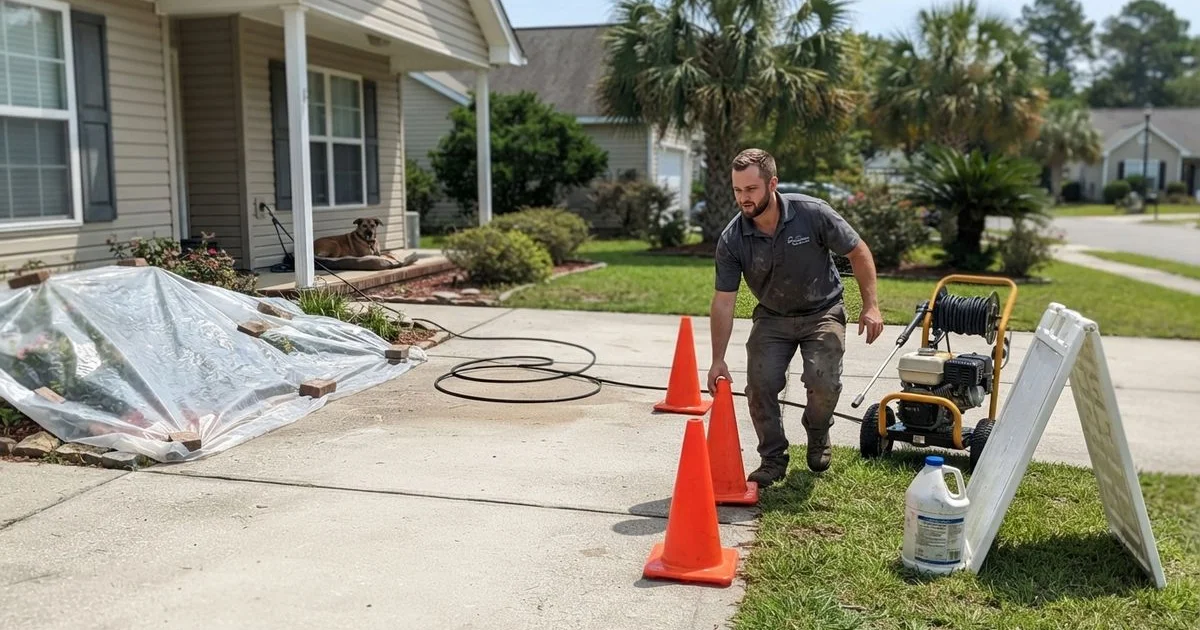
This is general safety information about pressure washing chemicals, not a substitute for the specific handling instructions on a given product. Follow the guidance your contractor provides for your job.
Soft washing and most modern pressure washing rely on a cleaning solution, not force alone, to break down algae, mold, and mildew. That solution does real work, which means it deserves real caution around the people, pets, and plants sharing your property while the crew is there. Choosing an eco-friendly, low-water cleaning approach reduces some of this risk, but doesn’t eliminate the need for basic precautions.
Before the crew arrives
A few minutes of prep meaningfully lowers the risk for everyone on the property:
- Bring pets inside, including outdoor cats and dogs on a tie-out, for the full duration of application and rinsing, not just while the truck is running.
- Keep kids and their toys clear of the work area. Move anything that gets picked up and mouthed, sandbox toys, sports equipment, away from surfaces being treated.
- Point out sensitive landscaping. Flag any plants you’re particularly attached to so the crew can pre-wet or cover them specifically.
- Close pet doors and low windows. Overspray can drift further than it looks, especially on a breezy day.
What a careful crew does during application
Professional soft washing typically involves diluting the cleaning solution to a controlled ratio specific to the surface and job, not applying it at full strength. A crew that takes safety seriously will pre-wet nearby plants with plain water before applying chemical to the house or roof, which dilutes any overspray that lands on foliage, and rinse those same plants again afterward to clear any remaining residue. They should also avoid working directly over exposed soil or mulch beds where runoff would concentrate rather than dispersing.
If you’re unsure what chemical is being used, it’s reasonable to ask. Most companies use variations of a biocide, commonly a diluted sodium hypochlorite solution, formulated for exterior organic growth, applied at concentrations far lower than what’s used in industrial or pool settings.
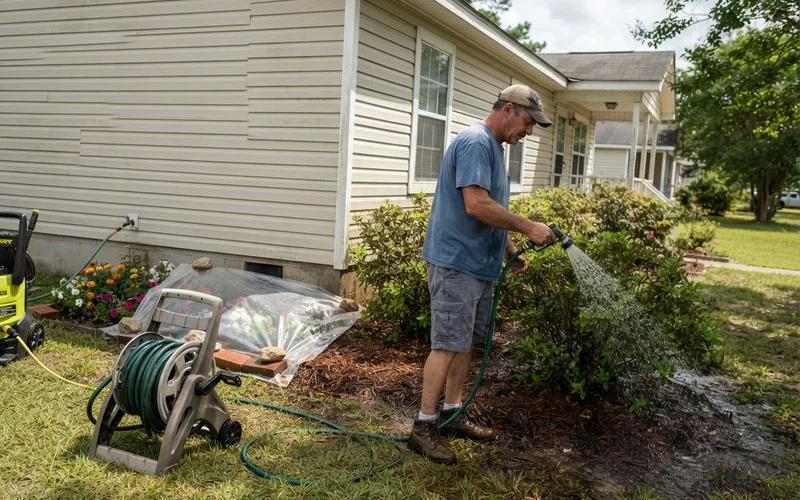
After the job: when it’s safe to go back outside
Most residue is rinsed away as part of the job itself, but surfaces typically need to fully dry before pets and kids resume normal use of the yard, generally within the same day for a standard residential application. If you notice a lingering chemical smell, plants showing stress like wilting or discoloration in the days after, or your pet showing signs of skin or paw irritation after being outside, treat that as worth following up on with the company, and for a pet showing symptoms, a vet.
Fish ponds and pools need their own plan
Backyard fish ponds and koi ponds deserve a specific mention, since even a small amount of runoff reaching the water can harm fish. If you have a pond anywhere near the work area, tell the crew before they start so they can cover it or reroute runoff away from it entirely rather than relying on dilution. The same runoff matters for storm drains and HOA rules beyond your yard too; see our guide on pressure washing wastewater and HOA rules in South Carolina for the bigger picture. The same caution applies to pool water, though most pools are enclosed enough that this is less often an issue than an open pond sitting close to siding or a driveway being cleaned.
A quick pre-visit checklist
| Step | Why it matters |
|---|---|
| Pets indoors for the full visit | Prevents contact with wet, treated surfaces |
| Kids and toys clear of work areas | Reduces contact and accidental mouthing of residue |
| Sensitive plants flagged to the crew | Lets them pre-wet or cover specific landscaping |
| Ask what chemical and dilution is being used | Gives you a clear answer if anyone has a reaction later |
Choosing a company that already works with eco-friendly, biodegradable formulas is a reasonable way to lower baseline risk, but the basic precautions above matter regardless of which product a crew uses. Our pressure washing directory lists eco-friendly and low-water cleaning providers in the Myrtle Beach area, and our methodology explains how we score and rank them.
Common questions
- Should I keep my pets inside during a pressure washing visit?
- Yes, for the duration of the application and rinse. Wet surfaces and diluted chemical residue can irritate paws and skin, and pets tend to investigate new smells and puddles, which increases exposure risk unnecessarily.
- How long after cleaning is it safe for kids to play in the yard again?
- Most companies recommend waiting until surfaces are fully dry and any visible residue has been rinsed away, generally the same day for a light application, though ask the specific crew for their guidance since dwell time and dilution vary by job.
- Will pressure washing chemicals kill my plants?
- They can, if overspray drifts onto foliage or runoff pools in a flower bed without being diluted or rinsed. A careful crew pre-wets nearby plants with plain water and rinses them again after, which significantly reduces this risk.
- Are eco-friendly pressure washing chemicals actually safer for pets and kids?
- Generally yes, biodegradable, lower-concentration formulas reduce risk compared to harsher industrial-strength chemicals, though 'eco-friendly' still means real cleaning chemistry. Keeping people and pets away during application and rinse remains the main safety step regardless of which product is used.