Is DIY roof pressure washing safe? Ladder and fall risks explained
By Ethan Marsh · Updated 2026-07-01
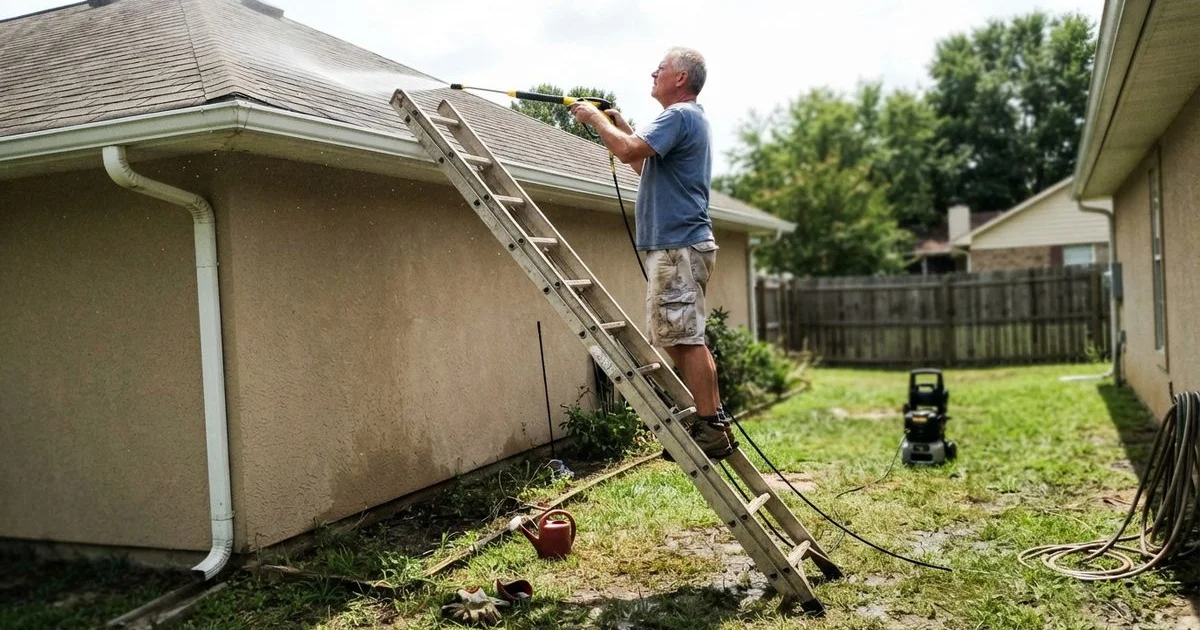
This is general safety information, not a substitute for professional judgment about your specific roof, ladder setup, or physical condition. When in doubt, hire a professional for roof soft washing rather than attempting it yourself.
Roof cleaning is the one pressure washing project where the physical risk to you matters as much as the risk to your house. Unlike a driveway or a fence, a mistake here can mean a fall from significant height, not just a damaged surface. Before you decide to DIY a roof cleaning, it’s worth understanding exactly where the danger comes from.
Why roofs are different from every other DIY cleaning project
Falls are the primary risk, and they come from two places: the ladder used to access the roof, and the roof surface itself if you climb onto it. Asphalt shingles, the most common roofing material in this area, become noticeably more slippery once wet, and algae or moss buildup, the exact thing you’re trying to clean off, adds even more slip risk before treatment has had time to work. A moderate or steep pitch that feels manageable dry can become genuinely dangerous once water and cleaning solution are involved.
Height alone changes the stakes. A fall from a single-story roof can still cause a serious injury; a fall from a two-story roof is a significantly more dangerous outcome. This is one of the clearest cases in exterior cleaning where the professional isn’t just faster, they’re working with harness systems, stabilized ladders, and training specifically built around this risk.
The case for cleaning from the ground
The good news is that soft washing, the standard method for roof algae and black streak removal, doesn’t necessarily require walking the roof at all. An extension wand applied from a securely footed ladder can reach most single-story and many two-story roof sections, with the solution doing the actual work of killing algae rather than force or scrubbing. This is a meaningfully safer approach than the older method of physically walking the roof with a pressure washer wand, and it’s a big part of why soft washing has become the standard rather than just a gentler alternative.
If your roof genuinely requires walking it, steep pitch, tile roofing, or hard-to-reach sections, that’s a strong signal to bring in a professional rather than attempt it yourself.
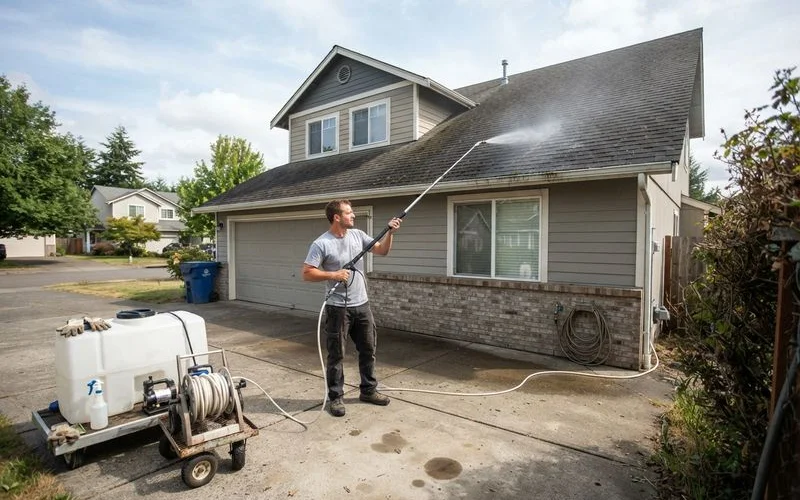
Chemical handling risks
Soft washing typically uses a diluted sodium hypochlorite solution, similar in concept to household bleach but at working strengths suited to killing algae and mold on a roof surface. Handled improperly, undiluted, without gloves, or without eye protection, it can irritate skin and eyes and cause more serious harm with prolonged contact. Professionals dilute this to a controlled ratio and know how to apply it without excessive drift onto themselves, nearby plants, or people below. A DIY attempt without that experience adds a chemical handling risk layered on top of the fall risk.
When DIY might be reasonable, and when it isn’t
| Situation | Risk level |
|---|---|
| Single-story, low-slope roof, ground-level wand application | Lower, still requires ladder caution |
| Two-story home, moderate pitch | Higher, ladder height alone raises stakes |
| Steep pitch or tile roofing | High, walking the roof carries real fall risk |
| Any roof cleaning attempted while wet or during poor weather | High, regardless of pitch |
If you have any doubt about your footing, your ladder setup, or your comfort with heights, that doubt is worth listening to. The cost difference between DIY and hiring a professional is small compared to the cost of a fall. If you’re hoping insurance might offset some of that professional cost, our guide on whether homeowners insurance covers roof algae cleanup explains why that’s rarely the case for routine cleaning.
Basic precautions if you do attempt it
For homeowners set on doing at least a ground-level application themselves, a few precautions reduce the risk meaningfully. Use a ladder stabilizer or standoff to keep the top of the ladder off the gutter, which both protects the gutter and gives you a more secure footing. Never work alone, have someone else on the property who knows you’re up there. Skip it entirely on windy days or right after rain, since both conditions make footing worse. And treat the chemical with the same caution you’d use for any strong cleaning product: gloves, eye protection, and read the dilution instructions rather than guessing at a stronger mix to save time.
Our pressure washing directory lists roof soft washing providers across the Myrtle Beach area, and our methodology explains how we score and rank the businesses listed.
Common questions
- Is it safe to walk on my roof to clean it myself?
- It depends heavily on the pitch, the roofing material, and whether it's wet. Steep or moderately pitched roofs get significantly more dangerous once wet, and walking on wet asphalt shingles specifically increases slip risk even for people comfortable with heights.
- What's the biggest cause of injury in DIY roof cleaning?
- Falls, both from the roof itself and from the ladder used to access it. A fall from roof height is one of the more serious home injury risks, and it happens most often when someone loses footing on a wet or steep surface.
- Can I soft wash a roof from the ground without climbing up?
- For many single-story homes, yes, a soft wash solution can be applied from a ladder or an extension wand at ground level and rinsed the same way, which is part of why professionals often avoid walking the roof at all for this specific method.
- Is the chemical used in roof soft washing dangerous to handle?
- Sodium hypochlorite, a common soft wash chemical, can irritate skin and eyes and needs to be diluted correctly. Handling it without gloves, eye protection, or proper dilution knowledge adds a real chemical safety risk on top of the fall risk.