Mold, algae, and mildew health risks on your home's exterior
By Ethan Marsh · Updated 2026-06-28
This is general information about exterior mold, algae, and mildew, not medical advice. If you or someone in your household has ongoing respiratory symptoms you suspect are related to mold exposure, talk to a doctor.
Myrtle Beach’s humidity and salt air create close to ideal conditions for algae, mold, and mildew to take hold on house siding, roofs, decks, and fences. Most of it is a cosmetic problem, but it’s worth understanding when exterior growth crosses into something that actually matters for your health, not just your curb appeal.
What’s actually growing on your house
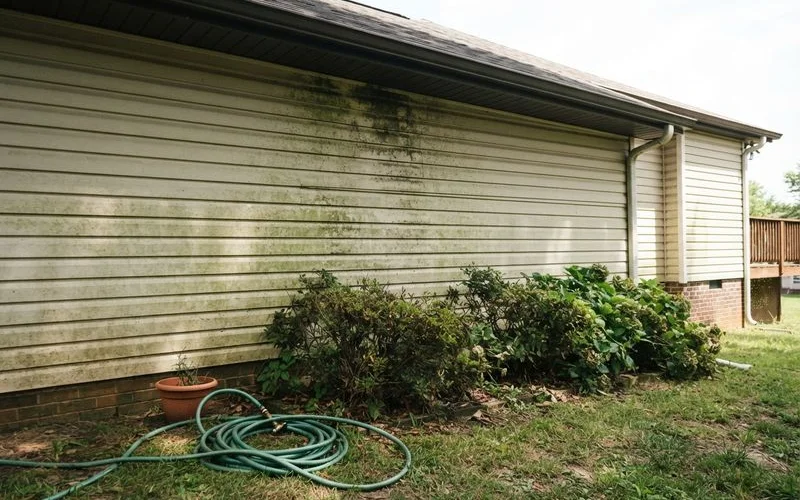
The dark streaks on a roof are typically a specific algae, Gloeocapsa magma, that feeds on limestone particles in shingles and doesn’t pose much of a direct health threat on its own. Green or black film on shaded siding, decks, and fences is more often a mix of algae, mold, and mildew, organisms that thrive on the moisture trapped by humidity, shade, and poor airflow. None of these are usually the “toxic black mold” species that gets attention for serious indoor air quality problems, but that distinction matters less than people think, since ordinary mold and mildew can still affect people with allergies, asthma, or other sensitivities.
When it’s more than cosmetic
A few situations move exterior growth from an appearance issue to something worth paying closer attention to:
- Growth near windows, doors, or vents. Spores have a more direct path indoors when organic growth is established right at an entry point into the house.
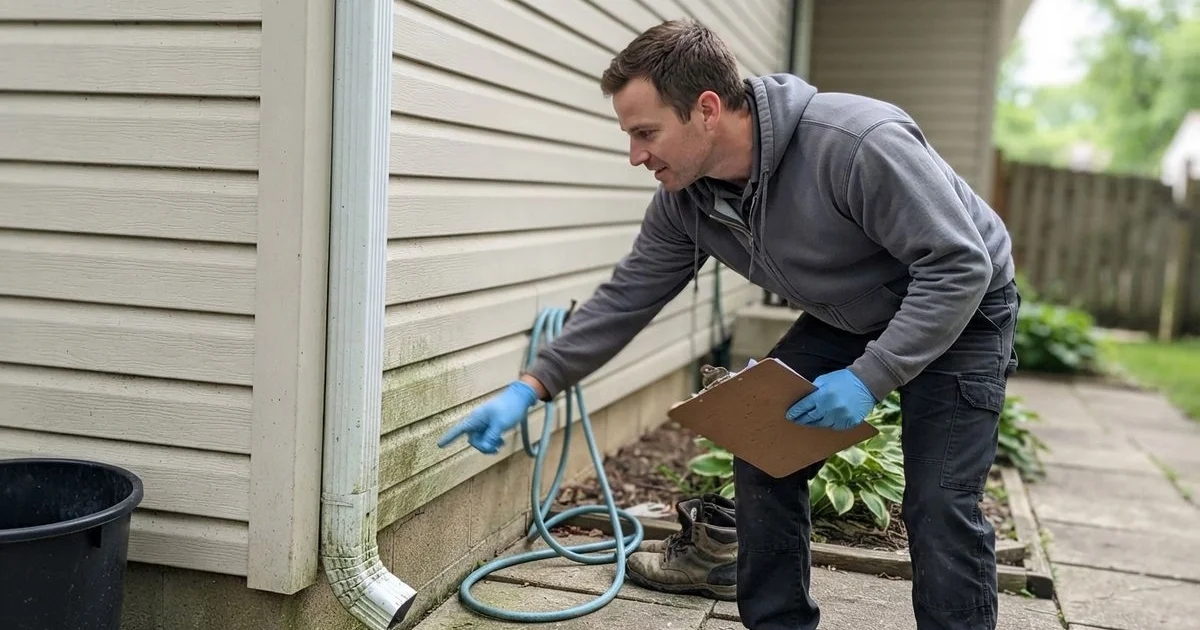
- Growth that keeps returning quickly after cleaning. This can indicate a moisture source that isn’t going away on its own, a leaking gutter, poor drainage, or a shaded, damp microclimate around one section of the house.
- Household members with asthma, allergies, or respiratory sensitivity. Even outdoor mold and mildew exposure can trigger symptoms for people who are already sensitive, especially with prolonged exposure like working in a garden bed right next to heavy growth.
- Visible growth appearing on interior surfaces too. If you’re seeing similar staining inside, near a window sill or in a closet on an exterior wall, that’s a stronger sign moisture has gotten past the exterior envelope and is worth a closer look from a mold or moisture specialist, not just a cleaning company.
Why soft washing addresses this better than pressure alone
Straight high-pressure water knocks visible growth off the surface but doesn’t necessarily kill the organism or its spores, some of which get pushed into the air or spread to nearby unaffected areas during the blast. Soft washing uses a cleaning solution, often containing a biocide, applied at low pressure and given time to dwell before rinsing. That kills algae, mold, and mildew at the surface instead of just relocating it, which is part of why professional soft washing tends to keep growth away longer than a DIY pressure-only approach. If you’re scheduling this kind of cleaning, see what to expect during a house washing appointment so you know what a thorough soft wash actually looks like.
Which surfaces tend to grow the most
Not every exterior surface is equally prone to this. North-facing walls and anything shaded by mature trees stay damp longer after rain and are usually the first place growth shows up. Roof valleys and sections shielded from direct sun follow a similar pattern. Wood decks and fences close to sprinklers or irrigation lines often develop growth faster than the rest of a property simply because they’re getting hit with extra moisture on a regular schedule. If you notice growth concentrated in one specific area instead of spread evenly, that’s usually a clue about where moisture is lingering longest, which can be useful information beyond the cleaning itself, sometimes pointing to a drainage or shade issue worth addressing separately.
A realistic view on risk
For most homeowners, exterior mold and algae is a maintenance issue more than a medical one. Regular cleaning on the schedule typical for this climate, roughly once a year for house siding, keeps growth from reaching the point where it’s a genuine concern instead of a cosmetic one. The exception is anyone in the household with existing respiratory sensitivity, where staying ahead of visible growth, instead of letting it build up between cleanings, is a reasonable precaution.
If you’re ready to have it addressed, our pressure washing directory lists house washing providers across the Myrtle Beach area, and our methodology explains how we score and rank them.
Common questions
- Is the green or black growth on my siding dangerous to touch?
- Casual outdoor contact, walking past it or brushing against it occasionally, isn't typically a significant concern for most healthy people. It becomes more relevant with prolonged, close exposure, or for people with asthma, allergies, or a compromised immune system.
- Can exterior mold get into my house?
- It can, particularly if growth is established near windows, vents, or areas where the exterior envelope isn't fully sealed. Spores can travel indoors through gaps, and heavy exterior growth is sometimes a sign that moisture is finding its way into wall cavities too.
- Is algae on my roof or siding the same as toxic mold?
- Not usually. The black streaks on roofs are most often a specific algae, not the toxic mold species associated with serious indoor air quality problems. That said, some mildew and mold species do grow on exteriors and can affect people with sensitivities.
- Does pressure washing actually remove the health risk, or just the appearance?
- Soft washing, which uses a cleaning solution rather than force alone, kills the organism at the surface rather than just knocking it off visually. Pressure alone without chemical treatment often just relocates spores rather than eliminating them.
Related on this site
- Browse house washing providers
- What to expect from a house washing appointment, step by step
- Does exterior cleaning help sell a house faster in Myrtle Beach?
- Is DIY roof pressure washing safe? Ladder and fall risks explained
- Keeping pets, plants, and kids safe during a pressure washing visit
- All guides →